









Obama & Latin America: New Beginnings, Old Frictions
Today, signs of frustration are unmistakable in Washington and in many Latin American capitals, despite Obama’s immense personal appeal and the continued promise of a more productive partnership.
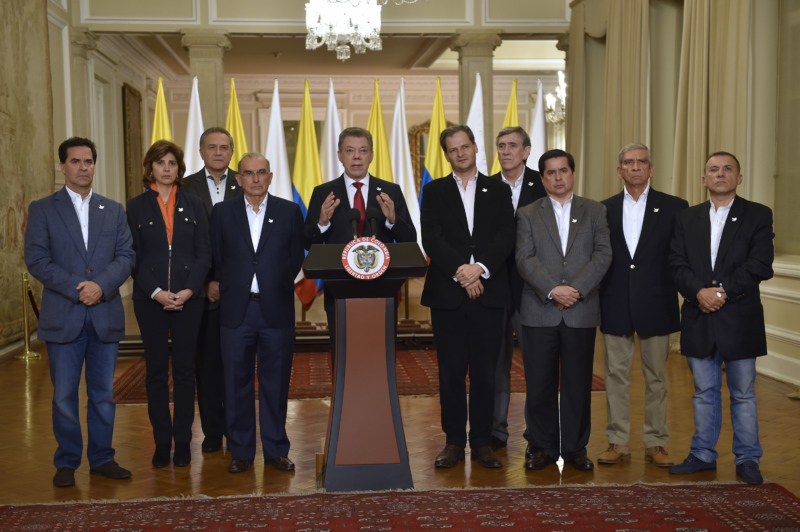 Juan Pablo Bello - SIG / Presidencia de Colombia
Sunday, by a razor-thin margin, Colombians rejected the peace agreement between the government of Juan Manuel Santos and the Revolutionary Armed Forces of Colombia (FARC), which had been painstakingly hammered out over four years. The result, defying all the polls, sent shock waves throughout Colombia and the entire international community — including the United States — which had strongly backed Santos and the peace deal. By many accounts, even Colombians who voted “no” were surprised by the victory and unsure of what would happen next.
For Santos, who staked his presidency on trying to bring the continent’s only remaining armed conflict to an end and exhorted Colombians to embrace the accord, the defeat was stinging. Less than a week before, in a ceremony in Cartagena soaked in symbolism and attended by an impressive array of foreign dignitaries, Santos signed the agreement with FARC leader Rodrigo Londoño, better known as Timochenko. The plan was that the dramatic signing ceremony would give a bounce for a big win in the plebiscite.
The opposition, however, had a different idea. Led by the widely popular former president and now senator Álvaro Uribe, the “no” campaign based its rejection on two key points: First, they denounced the leniency of the transitional justice system included in the accords, which would have allowed FARC leaders responsible for egregious crimes to avoid jail sentences. Second, they refused to accept the political participation of FARC leaders in government. This agreement, Uribe warned, was not only in violation of the constitution but would likely bring renewed violence and increased drug production.
Today, signs of frustration are unmistakable in Washington and in many Latin American capitals, despite Obama’s immense personal appeal and the continued promise of a more productive partnership.
Colombia and Venezuela have a history of rocky relations characterized by short bursts of improvement and deterioration.
On August 7, an important chapter in Colombian-Venezuelan relations that has coincided with the presidencies of Alvaro Uribe and Hugo Chavez will come to an end. These last eight years have been a rollercoaster, with moments of great tension but also occasional pragmatism.