Bernardo Londoy / CC BY-NC-SA 2.0
From its transition to democracy in 1958 to the deepening political crisis in the mid-1990s, Venezuela attracted meager attention from scholars. Thanks in large measure to the development of the petroleum sector in the early part of the twentieth century, the country became more prosperous and developed than its more economically distressed neighbors in Latin America. With a resilient two-party political system, Venezuela was seen as a model of democratic stability. In a sense, this made much of Venezuela's internal dynamics of little interest to policy analysts and academics; throughout the 1960s and 1970s, for example, there were virtually no serious studies of Venezuela's armed forces, which reflected the presumption that the military would remain uninvolved in political affairs.
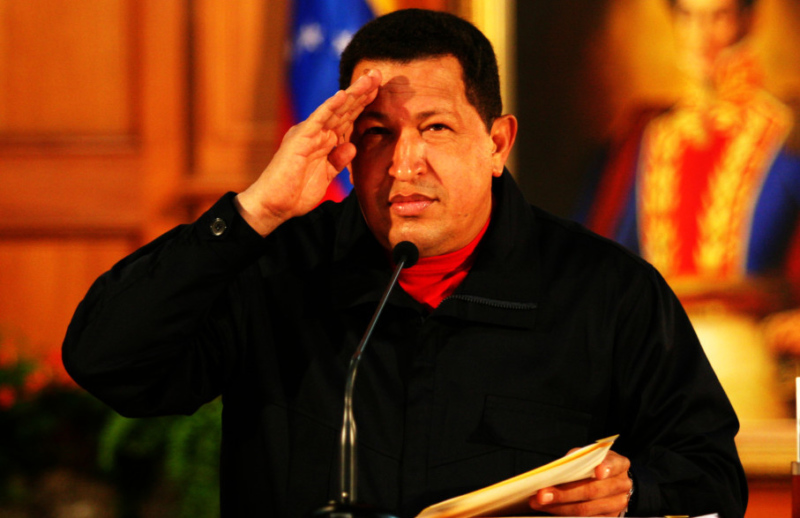
Then, in 1998, the nature of the Venezuelan state and society changed dramatically with the election of Hugo Chávez as president. Since then, Chávez has overseen a number of important changes both within Venezuela itself and in its foreign policy, particularly toward the United States. During Chávez's more than 12 years in office, Venezuela has overhauled its constitution and political system, and in so doing, has concentrated power in the president, mobilized a poor constituency, and pursued alliances in Latin America and the world to stand up to Washington. Chávez is an evolving phenomenon and has aroused considerable curiosity and strong passions across the political spectrum. Beside Cuba's Fidel Castro, no other Latin American leader has elicited as many journalistic accounts or serious analytic and conceptual contributions.
Today, signs of frustration are unmistakable in Washington and in many Latin American capitals, despite Obama’s immense personal appeal and the continued promise of a more productive partnership.



 Bernardo Londoy / CC BY-NC-SA 2.0