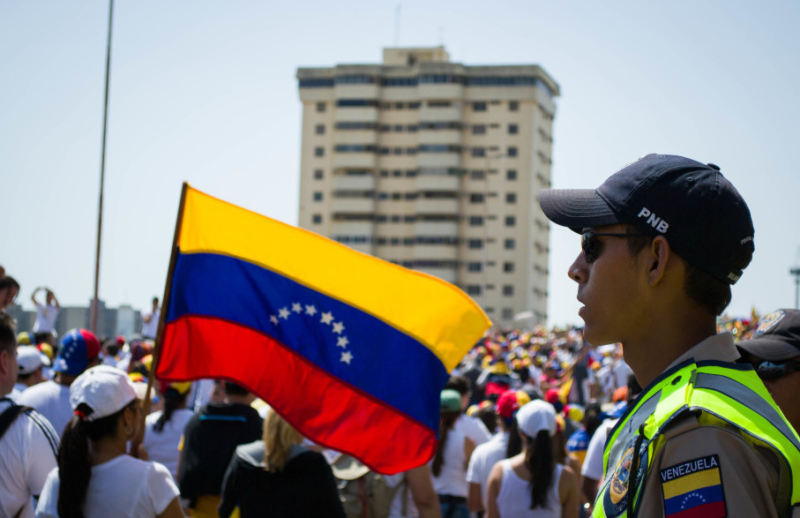
María Alejandra Mora / CC BY-SA 3.0
Since early February, anti-government demonstrations have rocked Venezuela. The repressive response of President Nicolás Maduro, the hand-picked successor of the late Hugo Chávez, has violated democratic norms and speaks to the semi-authoritarian nature of his presidency according to two prominent human rights activists who visited the Dialogue on March 26.
Government forces have jailed members of the opposition and arrested hundreds of demonstrators, some of whom report enduring torture during their detention. Since the wave of demonstrations began, at least 33 people have died in protests, including pro-government actors. Meanwhile, the Inter-American Press Association has condemned Maduro’s government for censoring information and treating both domestic and foreign media with hostility.
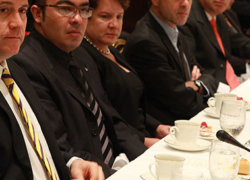
To address the current human rights situation in Venezuela, the Dialogue hosted an event featuring two prominent human rights and press freedom advocates from Venezuela: Liliana Ortega, Director of El Comité de Familiares de las Víctimas (COFAVIC), a prominent Venezuelan human rights organization, and Marianela Balbi, Director of Instituto Prensa y Libertad Venezuela (IPYS-Venezuela), an organization that monitors freedom of expression and threats against independent journalists.
The panelists agreed that Venezuelans find the country’s instability worrisome. Although the reported human rights violations are troubling, Ortega identifies the situation as an opportunity for Venezuela to confront the theme of human rights more seriously than it has in the past. Balbi spoke about the restricted flows of information in the country, and discussed the government’s arbitrary detention of journalists and the restrictions it imposes on the media. Small bastions of independent media exist, but the government’s control of resources restricts many outlets from disseminating information to the public. According to Balbi, this contributes to a climate of censorship and silence.
By violating citizens’ human rights and restricting the free flow of information, the Venezuelan government is flouting democracy and revealing its authoritarian nature. For Ortega and Balbi, respecting the constitution, including its democratic principles, is paramount to respecting human rights, ensuring freedom of the press, and resolving the country’s current crisis.
Citizen security remains a top concern for most Latin American governments as crime and violence spiral out of control and cripple political and economic institutions in the region.
Since the outbreak of the drug war, Ciudad Juárez has been plagued by unfathomable levels of violence and corruption, leading to thousands of human rights violations.



 María Alejandra Mora / CC BY-SA 3.0