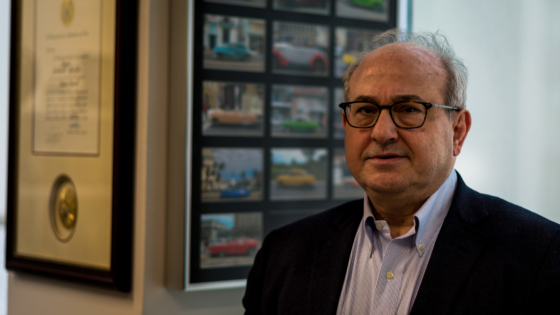
Shifter: “What these protests have made clear is that the Cuban people are suffering terribly”
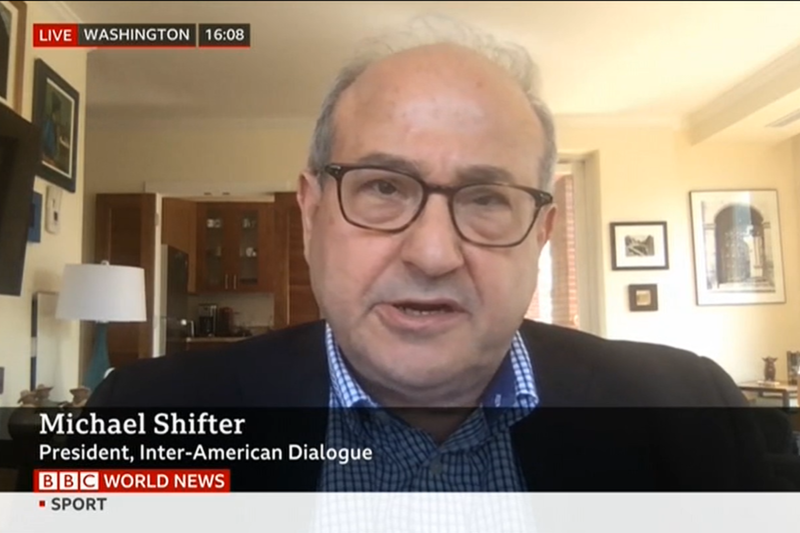
Michael Shifter, president of the Inter-American Dialogue, spoke with BBC World News about the current protests in Cuba and US sanctions towards the country.
COMMENTS FROM MICHAEL SHIFTER:
Question (Q): Congresswoman Nicole Malliotakis suggests that the only thing that is going to bring the Cuban regime to its knees is to keep these sanctions in place and to drive a hard bargain. Is that the way to remedy the situation?
Answer (A): It is not the way to help the Cuban people, which should be a major priority. What these protests have made clear is that the Cuban people are suffering terribly. There is economic deprivation, but there is also a lack of liberty. These economic sanctions are extremely harsh, and they are making things worse for the Cuban people. I don’t think we should subscribe to the logic that we should hurt the Cuban people so that we cause uprising and eruption in Cuba. That is not the kind of scenario that would make for the most stable democratic transition, which is what all of us want in Cuba. All of us want a transition that is not accompanied by major violence and that does not cause immense misery, which these sanctions have in Cuba.
Q: Congresswoman Malliotakis also stated that the minute we start putting things into the country, things are confiscated by the regime for their own riches, and that’s part of the problem. The only way it seems to bring an authoritarian regime like this to heel is to have people on the streets protesting against it.
A: I think the protests are fine, but protests are also motivated by a lack of liberty and a lack of basic fundamental freedoms. That is the responsibility of a repressive Cuban regime. I don’t think the way to do that is to starve the Cuban people and inflict greater pain and suffering on them. That is a huge cost to pay, and I am not sure that one that the international community or the United States wants to bear responsibility for.
Q: Is there a formal structure to the opposition? Who is driving it? Who is bringing these people out to the streets?
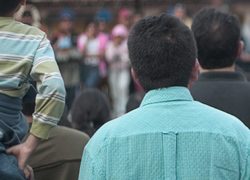
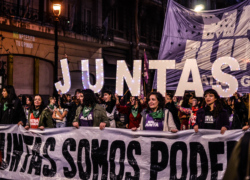
A: I don’t discern that there is a formal structure. It is rather spontaneous. There are different groups that have come together. There is nobody really that you can negotiate with and have a dialogue with that is identifiable in the opposition. These are sort of broad masses of people. As happens in many other countries in Latin America, there is a spark, which becomes much wider and begins to spread. There is no formal leadership. Whether that might emerge in the coming days or weeks, we will have to see, but so far there is not.
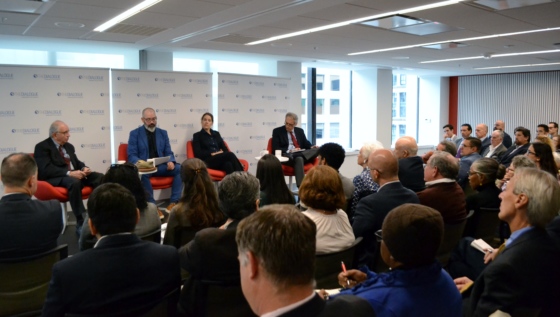
On October 16, the Inter-American Dialogue hosted an event to explore the Cuban economy’s future, its growth prospects, and the internal and external obstacles it faces.
Michael Shifter, presidente del Diálogo Interamericano, conversó con Juan Carlos Iragorri de El Washington Post Podcast sobre el voto de los países latinoamericanos en la Organización de Naciones Unidas respecto a la situación en Ucrania.