


A Fatal Blow to Democracy
Nicaragua is on the precipice.
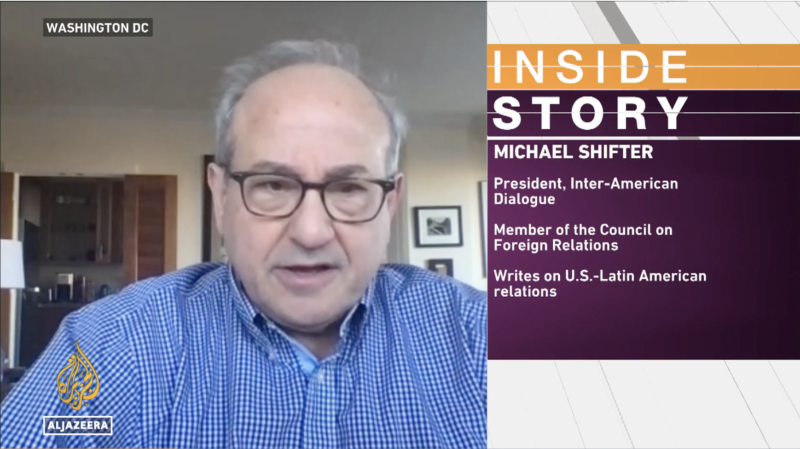 Inside Story / Al Jazeera
In this interview with Al Jazeera, Michael Shifter, president of the Inter-American Dialogue, discusses Daniel Ortega's fourth consecutive term after an election widely regarded as a sham.
“There is a substantial number of political prisoners in Nicaragua. All the opposition candidates for November's elections are in jail. This is a highly repressive, autocratic regime. Those who have been responsible for those human rights violations, senior officials in the government, have been sanctioned. That is the policy to try to apply pressure by the United States and by the European Union against these officials. Obviously, there is a very serious human rights crisis in Nicaragua, the likes of which Latin America hasn't seen for many years. That has been the response whether that changes the situation on the ground, it remains to be seen. Those who are responsible for this terrible situation and they've been sanctioned."
“This is a regime that is quite entrenched. There is a big reliance on the armed forces to cut this a pillar of Ortega support. I don't think Ortega is popular. The polls show that he has about 20 to 25 percent of the Nicaraguans who support him and in in Venezuela, Maduro has about 12 to 13 percent. Ortega has cemented ties with with the People's Republic of China and broken ties with Taiwan. He also relies on Russia. The situation is deteriorating, 170,000 Nicaraguans left in the last year, 80,000 of those to the United States. That is unprecedented. Most of them go into Costa Rica. It is clear that people are fleeing the regime. There is a widespread sense of fear and terror."
Nicaragua is on the precipice.
What will Ortega’s landslide victory allow him to do in his next term?
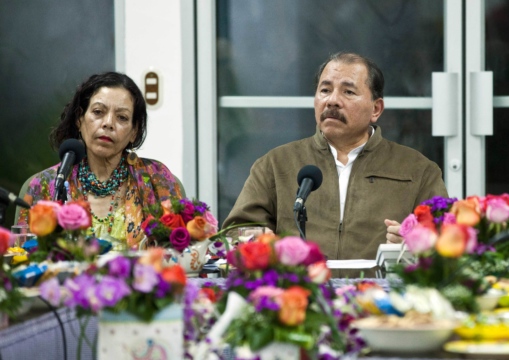
Strongman Daniel Ortega is running for a third term (with his wife as VP) and cravenly removing all checks on his power. Sound familiar?