
Hugo Stay Home
Hugo Chavez, the Venezuelan president, has clearly been enticed by the Libyan drama, where his longtime friend and ally, Muammar al-Qaddafi, is under siege from rebel forces.
 Wikimedia Commons / CC BY-SA 3.0
Weeks into Nicolas Maduro’s disputed second term as Venezuela’s president, his prospects for political survival appear more uncertain than ever. Many countries, including the United States and many South American and European countries, have recognized opposition leader Juan Guaido, president of the National Assembly, as the legitimate interim president, as he declared himself last month. It is risky to predict the end date of a regime whose leadership has already weathered nearly six years of economic crisis, but if it is approaching, there should be plans for reviving the economy of an oil-rich but desperate nation.
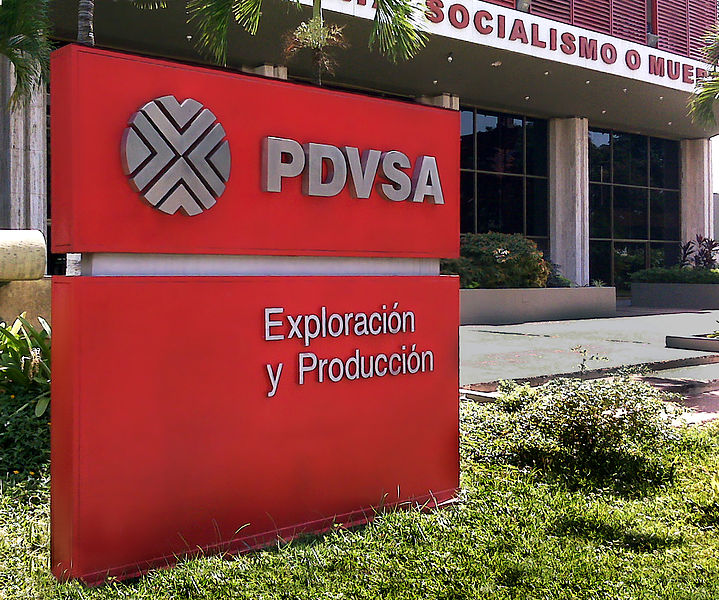
Guaido is already devising a strategy. He plans to introduce a new hydrocarbons law to attract investment and to name Gustavo Baquero, a former international oil company executive, as president of the state oil company, PDVSA. It’s unclear, however, how he could follow through on such moves when Maduro still controls the country and, most importantly, the military. Venezuela is in uncharted territory with two parallel leaders—Guaido claiming legitimacy and popular support and Maduro claiming real power.
Expectations ought to be tempered. Even if Guaido or another opposition figure finally takes the reins and starts fixing the oil sector, it will take years before oil exports can provide the economic boost needed to pull Venezuela out of the morass. Venezuela’s oil industry has been severely damaged, and there are questions about the long-term economic viability of its oil fields. Venezuelans will likely be disappointed with the pace of the economic turnaround under any new government—a risk that poses a real threat to political stability. As the United States takes stronger actions against the Maduro regime and commits more deeply to backing the opposition, it must also be prepared to support a very lengthy economic recovery.
[...]
Hugo Chavez, the Venezuelan president, has clearly been enticed by the Libyan drama, where his longtime friend and ally, Muammar al-Qaddafi, is under siege from rebel forces.
Estimates of the volume, composition, and characteristics of Chinese lending to the region since 2005.
As global temperatures continue to rise with the global community stalled on any way to stop them, countries must prepare to adapt to increasingly volatile environmental conditions.