


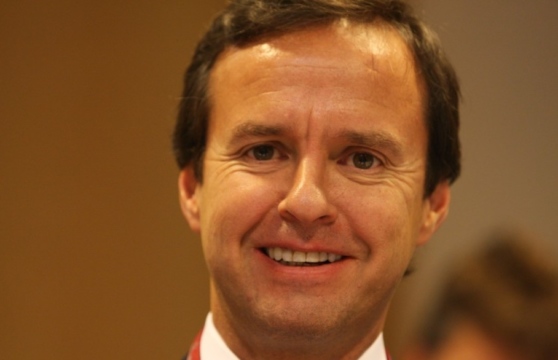
A Conversation with Jorge Quiroga
In early October, Morales announced he will run for a third presidential term . Is democracy under seige?
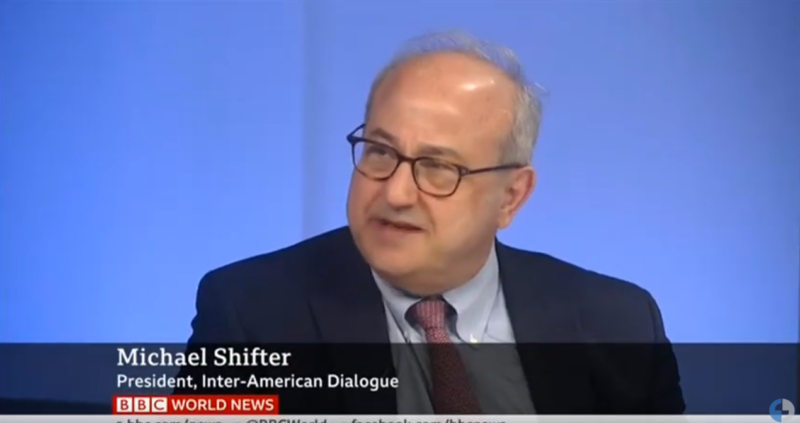 Youtube / BBC
Michael Shifter, president of the Inter-American Dialogue, spoke with the BBC about the latest in Bolivia. Shifter weighed in on the state of democracy in Bolivia, the significance of the military’s role in the resignation of Evo Morales, and differences between this situation and the case of Venezuela.
“We saw Evo Morales attempting to steal an election, so that's fraud and very anti-democratic. Then we saw the military play a role in ousting Morales, which is also anti-democratic. We don't know what's coming next. This has yet to play out, and the situation is extremely chaotic and extremely tense in Bolivia.”
“I think Morales really provoked this because it was clear that he was trying to stay in power, and he thought he could weather the storm. He thought the protests would dissipate, and that didn't happen. People got angry.”
“I think the military just felt that they couldn't control the streets, and they weren't prepared to shoot at Bolivians. There were just so many of them, and the military didn't want to be in that position. It looked like the situation was just untenable and the country was ungovernable. They said that would be best for Morales to resign, and then he resigned.”
“It remains to be seen who's going to preside over those new elections. I think the one thing that we saw in this election was that the Organization of American States did play a role. They're the one that audited the first election and basically charged Morales with committing fraud. I think the international community has a role to play, like the Organization of American States, but the situation is very fluid in Bolivia, so you really have to establish some authority and maintain order. Hopefully, both sides of this bitterly divided polarized country will come together and figure out an approach to have elections in the next couple of months.”
“I think the situation in Nicaragua and in Venezuela especially are extremely difficult and very different than the situation in Bolivia. I don't think we're seeing a wave. I think this is a very particular situation. The military is much more entrenched in Venezuela. They're involved in a lot of businesses. They're involved in drug trafficking and other criminal activities. It's a very different military in a very different situation than we see in Bolivia.”
In early October, Morales announced he will run for a third presidential term . Is democracy under seige?
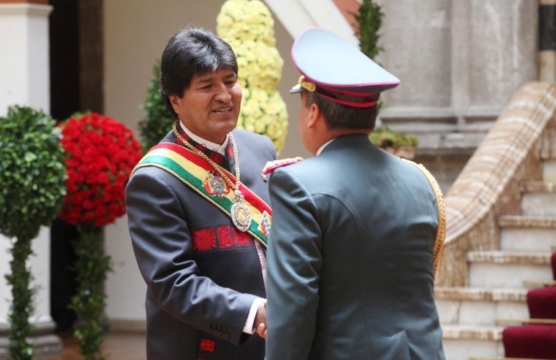
With Morales’ approval rating at 75%, it is likely that voters will re-elect him for a third consecutive term
Bolivian President Evo Morales won re-election with an estimated 60 percent of the vote. What can investors expect?