












The Earthquake’s Impact on Remittances
The earthquake in Haiti has exacerbated an existing distress during the international recession and increased uncertainty of what to do and how to help.
This post is also available in: Español
 Esta Semana / Confidencial
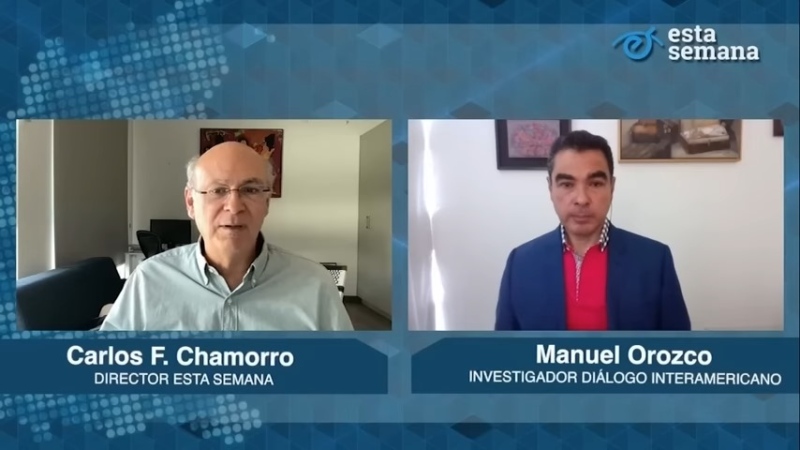
In an interview with Esta Semana and Confidencial, Manuel Orozco, director of the Migration, Remittances, and Development program at the Inter-American Dialogue, spoke with Carlos F. Chamorro about the future of the remittance trends, migration from Nicaragua, the Nicaraguan economy, and the future of the Ortega regime.
"The average number or amounts of remittances sent per person has not grown substantially. What has grown is the relative share, with regards to earlier periods, of migrants who have gone to the United States and are sending remittances."
"However, in general, a migrant doesn't have decision-making power because he or she leaves the administration of the money to the receiving household. Out of respect for the management of the household of the family member you are sending money to, you place your trust in your family member to use the money responsibly. And secondly, it's a very big responsibility to manage two households – the migrant's household and the remittance recipient's household. You are aware of the economic needs of the household, you know that people are not going out partying every day to spend money on other things, and your relatives recognize that you are sweating it out in this country, because here, if you don't work you don't eat."
"The regime has the resources to sustain itself economically for at least two more years under these conditions. At this moment Nicaragua is paying the equivalent of 75 percent of what it is borrowing. So it would not have the capacity to fiscally sustain itself the way the model was operating. Remittances have come to solve the problem and in a way what they are doing is extending a capacity for sustainability. Still, we are talking about the sustainability of the regime, of the State, not of the country."
[…]
The earthquake in Haiti has exacerbated an existing distress during the international recession and increased uncertainty of what to do and how to help.
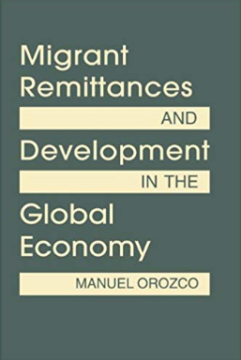
How do patterns of migration and remittances differ across regions? What kinds of frameworks support the contributions of remittances to local development?
Which countries in the region are making strides in fighting corruption, and which are falling short?