ONLINE EVENT: After the Vote—What’s Next for Mexico’s Judiciary?

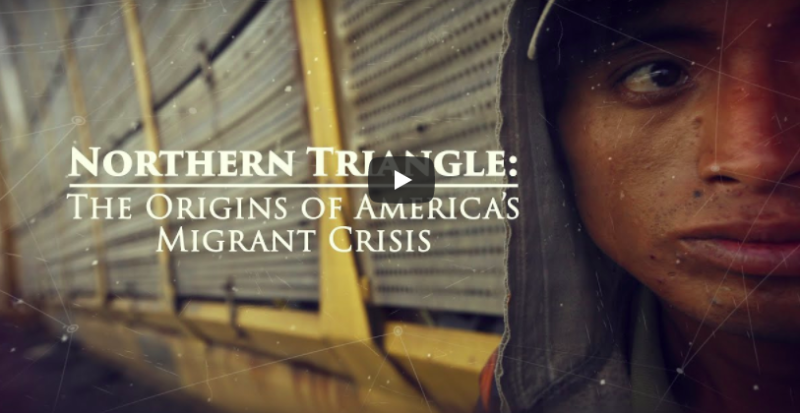
Northern Triangle: The Origins of America's Migrant Crisis
Great Decisions / Foreign Policy Association / Youtube

Share

Authors

  • MacDara King

Topics

Northern Triangle: The Origins of America’s Migrant Crisis

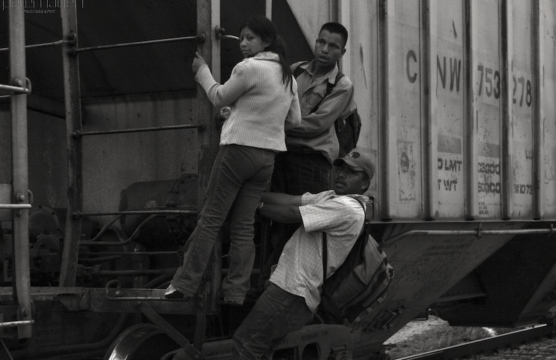
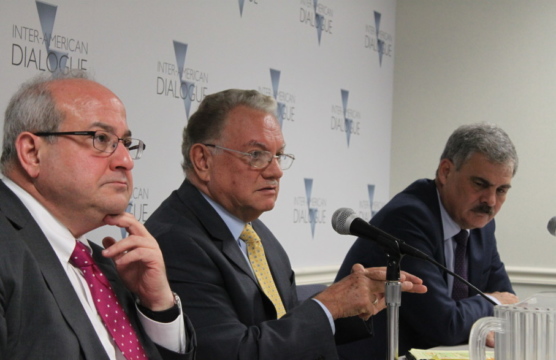
Great Decisions examines in the documentary “Northern Triangle: The Origins of America’s Migrant Crisis” the Western Hemisphere’s migration crisis and the fractured societies at the heart of it: Guatemala, Honduras, and El Salvador. Michael Shifter, president of the Inter-American Dialogue, is one of the featured guests in this documentary. 

Comments by Michael Shifter: 

“The Salvadoreans came to Los Angeles and they formed gangs and many of them have now gone back to El Salvador. They really don’t find economic opportunities, and the gangs give them a kind of identity.”
“Many of these societies are controlled by traditional elite groups, sometimes referred as the oligarchs, and they have amassed enormous amounts of wealth, they concentrate the wealth, they run the main economic activities in these countries and their commitment is much less to open up these societies and give opportunities to others than it is to perpetuate and increase their wealth.” 

“A lot of their economies are heavily reliant on crops like coffee. Coffee prices go up and coffee prices go down, and so they are very vulnerable.” 

“Wealthy people don’t want to pay taxes, because they don’t believe that the government provides good services.”

“The Alliance for Prosperity was born because of the unaccompanied children crisis, that really got out of hand in the summer of 2013.”

Watch the full documentary here:  

Guests:

  • Paul Angelo, Fellow for Latin America Studies, Council on Foreign Relations
  • Otaviano Canuto, Former Vice President, World Bank
  • Michael Doyle, Professor, Columbia University
  • Amb. John Feeley, U.S. Ambassador to Panama (2015–2018)
  • Amb. Mary Flores Flake, Honduran Ambassador to the United Nations
  • Sen. Ed Markey (D-MA)
  • Amb. Deborah McCarthy, Dep. Asst. Sec. of State for Narcotics and Law Enforcement (2002–2004)
  • Sen. Jeff Merkley (D-OR)
  • David Miliband, President, International Rescue Committee
  • Amb. John Negroponte, U.S. Ambassador to Honduras (1981–1985)
  • Christopher Preble, Vice President, Cato Institute
  • Ben Rhodes, Dep. U.S. National Security Advisor (2009–2017)
  • Sen. Rick Scott (R-FL)
  • Michael Shifter, President, Inter-American Dialogue

Credits: 

Executive Producer: MacDara King
Narrator: David Strathairn
Producer/Supervising Editor: David Heidelberger
Producer: Andrew Court
Editor: Christina Choriatis

COMENTARIOS DE TARACIUK BRONER:

Q & A:

Q

¿Qué tan válido ves tú — o legítimo — el temor que reporta la Casa Blanca de que aumente la migración haitiana?

A

“Una política de seguridad que funcione debe tener dos pilares: una visión punitivista donde quien comete un delito vaya preso, pero con debido proceso y bajo investigaciones por un poder judicial independiente y, por otro lado, una serie de políticas que sean más sociales y preventivas que eviten la comisión del delito.” 

View Video Clip

Key Findings

Suggested Content

Chavez: “Cuba and Venezuela form a close authoritarian alliance focused on regime survival, with Cuba supplying key intelligence and security support. The deaths of 32 Cuban operatives during the operation to remove Maduro show how intertwined they are.”

On January 13, President and CEO of the Inter-American Dialogue Rebecca Bill Chavez spoke with DW News to discuss why China and Russia are closely

Chavez: “One thing to note is that Maduro is out of Venezuela, but Madurismo remains in place.”

On January 10, Rebecca Bill Chavez, president and CEO of the Inter‑American Dialogue, spoke with Bloomberg Television to discuss the competitive geopolitical factors that influenced

Santos: “Brazilian diplomacy therefore needs to carefully separate two layers: defending the principles of the UN Charter and pragmatically managing the relationship with the US.”

In an interview with Deutsche Welle, Bruna Santos, director of the Brazil Program, argues that the challenge facing Brasília is not one of rhetorical balance

The Inter-American Dialogue MEXICO Program

SUBSCRIBE TO OUR NEWSLETTER / SUSCRÍBASE A NUESTRO BOLETÍN:

* indicates required

The Inter-American Dialogue BRAZIL Program

SUBSCRIBE TO OUR NEWSLETTER / SUSCRÍBASE A NUESTRO BOLETÍN:

* indicates required

Subscribe To
Latin America Advisors

* indicates required field

This site is protected by reCAPTCHA and the Google Privacy Policy and Terms of Service apply.

The Inter-American Dialogue Education Program

SUBSCRIBE TO OUR NEWSLETTER / SUSCRÍBASE A NUESTRO BOLETÍN:

* indicates required