















The Politics Of Disaster Relief
After a 7.0 magnitude earthquake struck Haiti, the aftershock reached China in ways that few anticipated.The earthquake forced Chinese leaders to navigate the tricky politics of disaster relief.
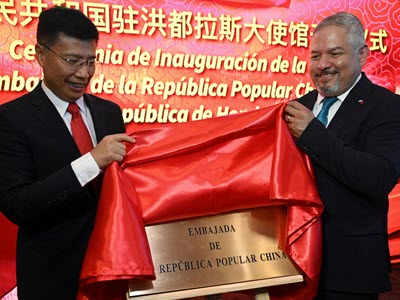 Orlando Sierra | AFP via NBR web site
The People’s Republic of China (PRC) has stepped up its engagement across all domains of national power with countries in Latin America and the Caribbean in the last two decades. Aruna Muthupillai of the National Bureau of Asian Research interviewed Margaret Myers of the Inter-American Dialogue about the various components of the PRC’s engagement with the region, including across diplomatic, economic, and security arenas, as well as about how the United States can respond in an era of strategic competition with the PRC.
Q: How does the Latin America and the Caribbean (LAC) region fit into China’s overall geoeconomic and geopolitical strategy? What tools of national power has China used to fulfill its goals in the region?
A: China has advanced numerous policies in LAC over the past couple of decades, but engagement with the region continues to be driven in very large part by the “going out” strategy that was put forth by the Chinese government in the late 1990s. The three tenets of this strategy—ensuring access to natural resources, developing markets for increasingly high value–added goods and services, and achieving a competitive position for Chinese companies in the region’s strategic industries—are as relevant today as they were two decades ago at the onset of enhanced commercial relations.
In LAC and elsewhere, China’s resource-seeking activity (e.g., soy trade and investment in the oil industry) is closely linked to its food and energy security objectives. Increasingly, it is also linked to an interest in securing industrial supply chains, as Latin American countries award concessions for lithium and critical minerals extraction. The region’s importance as a market for Chinese goods and services has grown in recent years as well, especially as China’s tech companies encounter legal and administrative obstacles in much of the “global North.” Indeed, in LAC, Chinese companies are in many cases shifting focus from large-scale infrastructure projects to projects in innovation-related industries—such as cloud computing, artificial intelligence, and renewable energy technologies—that are closely linked to China’s own prospects for economic productivity and global competitiveness.
China has also sought support in the region for its positions on Taiwan, Hong Kong, Covid-19, human rights, internet governance, US-China competition, and many other issues. Its increasingly dominant commercial footprint in the region certainly promotes some degree of political and policy alignment with its major trade partners. China’s political and economic interests are also advanced by its expansive and sophisticated diplomatic outreach. In LAC, China engages in what I’ve termed “multi-tiered” diplomacy, or engagement at the multilateral, bilateral, and local (provincial or municipal) levels, carried out by a kaleidoscopic cast of characters hailing from China’s ministries, companies, and many other organizations. In practice, this amounts to numerous meetings organized by the China-CELAC (Community of Latin American and Caribbean States) Forum, a regional platform of China’s creation; wide-ranging bilateral mechanisms and agreements; and growing outreach to municipal authorities, not just in capital cities but also in resource-rich or well-positioned towns across the region.
Of course, much of what is happening in LAC is also being driven by regional actors who are seeking support for critical infrastructure projects, energy transition initiatives, or other forms of cooperation. Increasingly, provinces and cities are approaching China with their own interests in mind and lists of projects in hand. Even though the China-LAC relationship is still largely shaped by China’s varied interests, it is very much coproduced at all administrative levels.
After a 7.0 magnitude earthquake struck Haiti, the aftershock reached China in ways that few anticipated.The earthquake forced Chinese leaders to navigate the tricky politics of disaster relief.
Despite reports in recent months that Mexican manufacturing is experiencing a resurgence, Mexico’s industrial sector faces tremendous challenges.
China has rapidly emerged as the world’s leading consumer and importer of minerals.