















Fighting Corruption and Improving Business Climates in Latin America
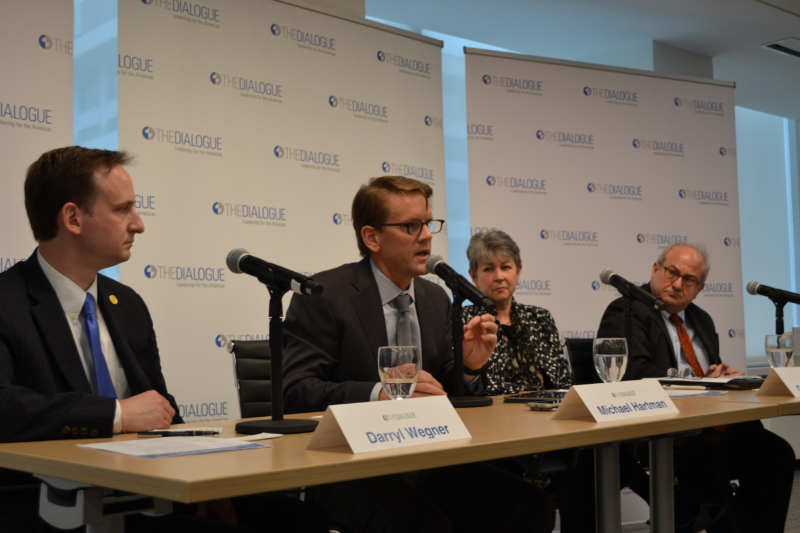 Ben Raderstorf / Inter-American Dialogue
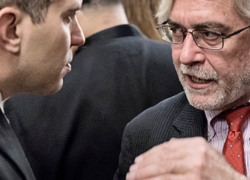
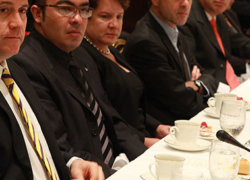
Why does corruption matter for the private sector? This was a driving question behind the event “Fighting Corruption and Improving Business Climates in Latin America” hosted by the Dialogue on April 25th. Darryl Wegner, Chief of the International Corruption Unit of the FBI, Michael Hartman, Senior Vice President and Assistant General Counsel at AT&T, and Gene M. Smith, President of Smith Brandon discussed the current state of the fight against corruption in Latin America.
Corruption is important, not only because it is illegal, but because it leads to a lack of confidence in the government. Moreover, corruption is not constrained by borders, money laundering activities take place in the US and assets are often hidden in US territory.
In recent years, Latin America has experienced a change in attitudes towards corruption. Many seemed to go from believing that it was inevitable, to a sense of strong disapproval. Law enforcement has adjusted to that change, which has generated important new cooperation between the U.S. and Latin America.
Corruption leads to unfair competition and to a lack of quality control. After a company gets involved in corrupt activities it cannot get out of them, which underscores the importance of anti-corruption efforts by actors in the private sector. They are cost-effective and, overall, “good insurance”.
The anti-corruption wave in Latin America has been slow to manifest in real policy changes, but it still gives hope to the region. Corruption has not only been about economic gain, but also political objectives. In many countries it has helped to smooth legislative processes and has worked to generate political consensus. There is some evidence, however, that this is changing, as the costs and risks of corruption for individual actors grow higher.
The private sector plays an important role since it is in the front line dealing with the government and local employees. Companies also end up assuming the risks and transactional costs associated, sometimes inadvertently. Importantly, because private corruption—i.e. corruption that does not involve state actors—is in some countries not illegal, it is also critical to go beyond a culture of compliance and towards a culture of corruption prevention. However, companies cannot build this culture on their own. The answer is not necessarily in generating more rules, which can sometimes create unnecessary incentives for a compliance culture over a true anti-corruption culture. In other words, creating regulatory checks only forces compliance and does not necessarily encourage companies to take proactive steps against corruption.
The event ended with questions from the audience in which the speakers discussed the nexus of the US with Latin American corruption, whistle-blowers and the complications of establishing a frameworks that give them incentives to speak but also punish misdeeds, and how cooperation in the region is growing stronger in this fight.