



Peru’s Election and Beyond: What’s Next?
Peruvians want an evolution, not a revolution.
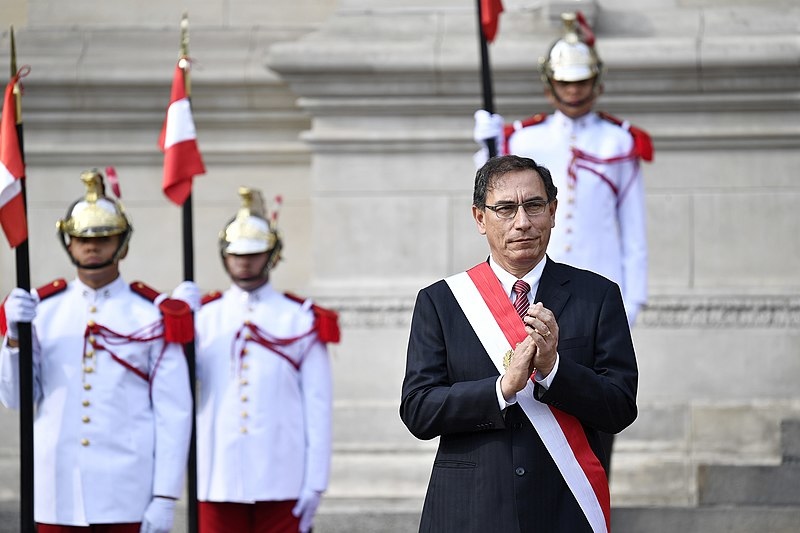 Ministerio de Relaciones Exteriores / Flickr / CC BY-SA 2.0
On Sunday, January 26 Peru held extraordinary elections for congress after President Martin Vizcarra dissolved it in September last year. Michael Shifter, president of the Inter-American Dialogue, discussed with BBC Newshour what this election means for Peru.
“Martin Vizcarra, who is the current president, became president because the president before him, Pedro Pablo Kuczynski was forced to resign because of corruption charges. Vizcarra came to be president with a very strong anti-corruption agenda. He has fierce opposition from Congress, especially from a party led by Alberto Fujimori’s daughter, Keiko Fujimori, called Popular Force. There was total gridlock and it was unable to make any progress.”
“Vizcarra decided to dissolve the congress last September. It was a bit of a controversial decision, there were constitutional experts that had different views on it, but it was affirmed by the Constitutional Court last week. And the idea was to dissolve the congress and call new parliamentary elections to see whether a new congress would be able to be more cooperative in pursuing this anti-corruption agenda.”
“We can expect less resistance from Popular Force, that is the party of Keiko Fujimori, but there is certainly no guarantee that the next congress is going to be more sympathetic or will be able to work more productively with president Vizcarra. This is a huge gamble on his part and certainly the names that we see as candidates are not terribly reassuring and don’t arouse a lot of enthusiasm among Peruvian voters.”
“This congress will only sit for a bit over a year. The elections for president will be in April 2021. As soon as this election take place, people will start looking at 2021. Vizcarra cannot run again, so many of the people who present themselves as candidates in this election are trying to position themselves for the presidential race.”
“One of the key points in Vizcarra’s agenda is, for example, to lift the immunity that members of congress have from prosecution. Currently if you are a member of congress you are completely protected. He wants to change that and also to have no reelection for members of congress, so there are a variety of reforms that he has put forward but they haven’t gone anywhere. He is hoping that a new congress will go along with him and be more supportive.”
“I think it will happen [Keiko Fujimori going to trial]. The judicial system is not a model of efficiency in Peru, so it could take some time, but I think it will happen.”
Peruvians want an evolution, not a revolution.
Everything you need to know about Peru’s presidential elections.
 Video
Video
Insight and analysis into an unpredictable presidential contest