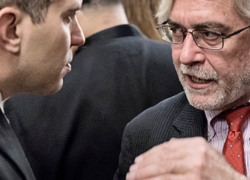
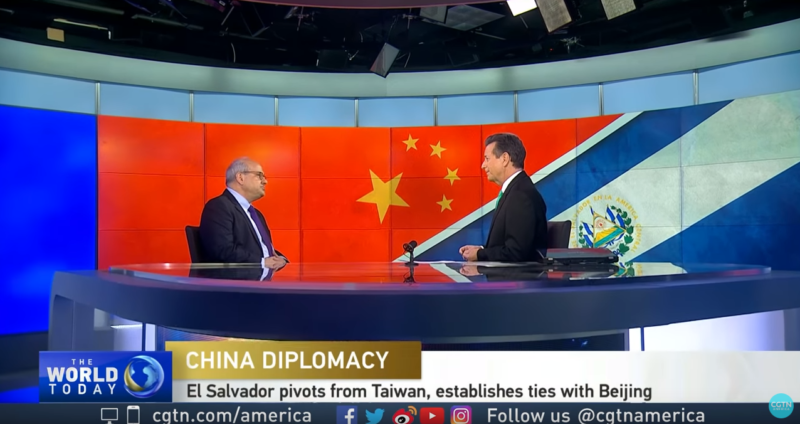
El Salvador has become the latest country to cut ties with Taiwan and establish official relations with Beijing. Michael Shifter, president of Inter-American Dialogue, discusses with CGTN’s Mike Walter.
Michael Shifter’s comments:
“This decision is clearly motivated by economic interests and also to project El Salvador onto the global stage. El Salvador is part of the so-called ‘backyard of the United States’ today and clearly, China is engaging in a very aggressive strategy in Latin America. A year ago we had Panama recognizing the People’s Republic of China, then the Dominican Republic earlier this year, and what China offers is an economic investment, cooperative projects and I think we should expect to see that in El Salvador. El Salvador is a poor country, with a lot of people leaving, and so they are looking for economic opportunities and that seems like a very appealing option at this point.”
“I think we should see this as part of an evolution in terms of China’s growing engagement and presence in Latin America and also the withdrawal or indifference from the United States that is preoccupied with our own problems with Asia, the Middle East and other areas that are considered more strategically important. I think you have governments in the region that are just being pragmatic. This isn’t an ideological question, it's a pragmatic question and an economic question. They want to increase growth, they want to reduce poverty, and if there is an investment and there is increased trade and someone is making a good offer as China may be, they are obviously going to be very interested. The United States is not providing an alternative and unless it does so, it is going to lose a lot of ground.”
“This has been an increasing concern of the United States, and El Salvador is one of the recipients of the Alliance for Prosperity countries including Guatemala and Honduras, which we may also expect to switch to China in the not so distant future. The reaction from the US expresses the sense of ‘you are in our backyard, and we are providing you with opportunities, you should work with us and not work with China', as if posing a choice, and this is self-defeating because if the United States withdraws more, if you threaten to reduce or withdraw aid, the US is going to lose even more influence, and the Salvadorans are going to pursue their own interest and look for their own economic growth. It is also hypocritical – the United States recognized China 40 years ago in 1979 and so El Salvador is doing exactly the same thing. Why criticize El Salvador?”
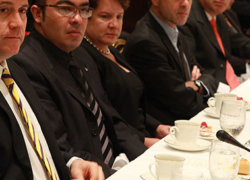
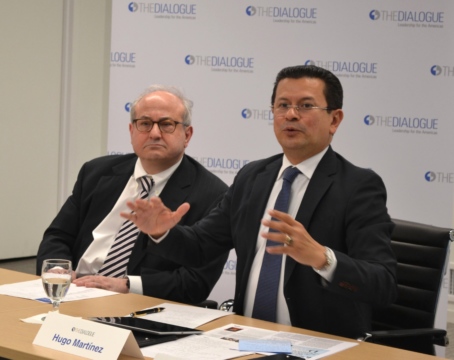
On Monday, December 5th, 2016, the Dialogue welcomed El Salvador’s Minister of Foreign Affairs Hugo Martínez for a discussion on US-El Salvador relations in light of recent political developments in Central and North America. The discussion focused on the Plan for the Alliance for Prosperity of the Northern Triangle as the guiding policy of US engagement with El Salvador and the neighboring countries of Guatemala and Honduras.
En esta entrevista radiofónica con Luis Montes para WLIE 540 AM, Michael Shifter analiza el presupuesto del gobierno de Trump y su impacto en la región, lo que podemos anticipar sobre las políticas de Estados Unidos hacia Cuba, y el rol de distintos actores en la crisis de Venezuela.