












Europe Might Take Another Step Back
If Spain fails to have the Common Position lifted or if it succeeds and Havana again turns down European economic cooperation, then Cuba wins once more.
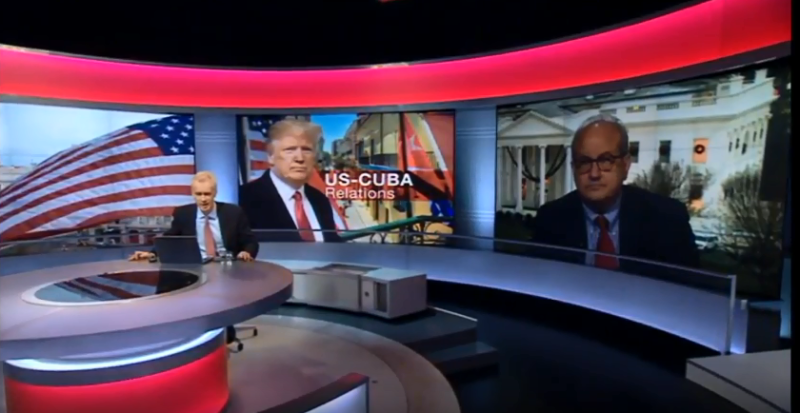 BBC World News / Youtube
In this interview with BBC World News, Michael Shifter discusses the current state of relations between the US and the island nation, what we know so far regarding the sonic attacks to US diplomats in Havana, and what we can expect after the 2018 change of leadership if Cuba.
What are Donald Trump’s intentions on Cuba?
“What Donald Trump is trying to do is undo Barack Obama’s legacy. He is doing that in a variety of policy areas, whether foreign or domestic, and in Latin America, the biggest legacy of Barack Obama was the opening with Cuba. Trump doesn’t want to completely undo, but he has reversed a number of the measures in the Obama administration.”
“I don’t think he is going to go much further, but he has shown the hard-line constituents who voted for him in 2016 that he is going to fulfill his promise and take a tougher position, but I don’t think there is any prospect now of breaking diplomatic relations.“
What do we know about the sonic attacks?
“It is still a mystery and a puzzle that we are trying to figure out. The way the Cubans reacted when this came to light showed that they were very upset, at least the Cuban government. There may be other forces within the government or factions that reacted differently, but Raul Castro’s government seemed to be very upset. The Foreign Minister came to Washington and spoke to Rex Tillerson, the US Secretary of State, trying to get the US to back off, to not do anything drastic. Every sign showed that they were very upset about this, and it is still unclear what happened.”
What can we expect in a Cuba after Raul Castro?
“I don’t think there will be any major changes in the relation between Cuba and the US at the outset of this change. I think that for the new president, whether it is the current Vice-President or someone else, there will be a testing time for that person. I don’t think we should expect any dramatic shift, at least at the beginning.”
If Spain fails to have the Common Position lifted or if it succeeds and Havana again turns down European economic cooperation, then Cuba wins once more.
The Summit of the Americas was marked by discord between the US and Latin American countries. What did it accomplish, if anything?
On April 25, the Inter-American Dialogue hosted a conversation on the Cuba’s evolving political and economic situation and how the Catholic Church views its role in the country.