









The Nationalism of Cristina Fernández de Kirchner
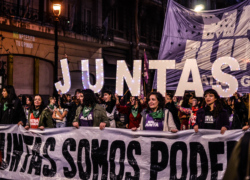
Argentine President Cristina Fernández has increased her appeals to nationalist sentiment to build domestic political support.
 Al Jazeera
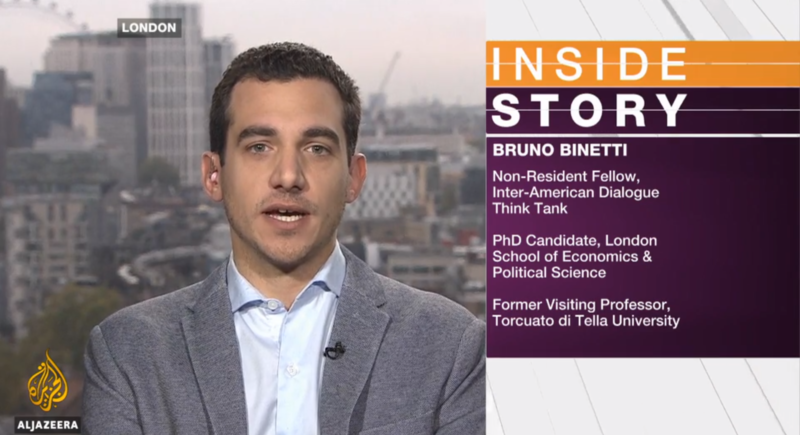
Bruno Binetti, non-resident research fellow at the Inter-American Dialogue, spoke with Hazem Sika of Al Jazeera about the Fernández-Fernández victory in Argentina. Binetti weighed in on Macri’s shortcomings, implications for the Argentine economy, and political trends in South America.
Why did Macri’s policies not work?
"That is what everyone is trying to understand. It was a combination of things. There was exceedingly high confidence that Macri would be able to bring foreign investment to the country. That didn’t happen. The capital that did enter was mostly short-term capital that fled as soon as conditions changed. On the other hand, there were inconsistencies among Macri’s fiscal and monetary policy. Some would say that a real plan to tame the public deficit didn’t start until they were forced to turn to the IMF. There was also talk about how the Macri administration interfered with the central bank. There are many possible theories about why Macri’s pro-market reforms ended up failing."
How are foreign investors going to be looking at this seemingly new era in Argentina?
"In August, when the primary elections took place, the markets were expecting a bigger turnout for Macri. That didn’t happen, and foreign investors entered panic mode. I think what they are looking for are signs that Fernández, who is a relative moderate within his coalition, will in effect be the one making decisions and not his vice president. I think they are going to be looking at whom Fernández is appointing as Minister of the Treasury, what his approach is to renegotiating the foreign debt, and whether he accepts that the conditions of the economy will largely dictate policies that might not be that different from those that Macri has been implementing. I think investors are going to be looking for signs of moderation and for signs that Fernández has well-thought-out economic plans to tackle this crisis."
This Peronist, leftwing win, goes against the political winds in the region such as those we have seen in Colombia, Brazil, and Chile. What do you make of that contrast?
"I think we are experiencing great political diversity in South America, which of course is defined by polarization and anger against incumbents of all political stripes. I think we have a tendency of extremes in some countries, such as Brazil, but I don’t think we are seeing a new wave toward the left. I think each country has particular political systems. The common thread is the end of the commodities boom around 2013 and the fact that governments, whether from the right or from the left, have been incapable of rekindling economic growth and returning to the amazing growth rates that South America enjoyed in the early 2000s."
Argentine President Cristina Fernández has increased her appeals to nationalist sentiment to build domestic political support.
How will the Fernández administration’s policies affect the country’s economy and businesses in the long-run?
Given today’s realities, the glowing terms some used to describe US-Argentine relations in the 1990s do not make sense. But neither does the excessively negative talk heard in Buenos Aires and Washington.