
















Rethinking US Drug Policy
US citizens today are clearly unhappy with their government’s anti-drug policies.
 U.S. Department of State / Flickr
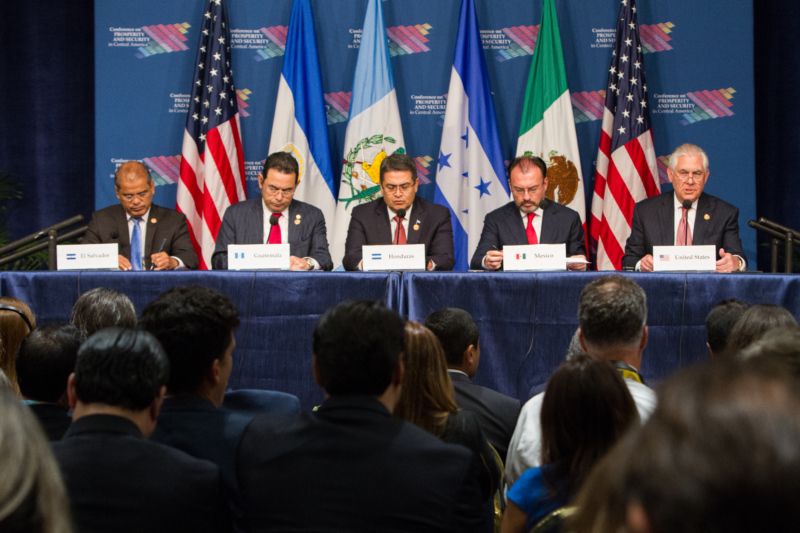
As the Trump Administration proposes cutting aid to Central America – and as American, Central American, and Mexican leaders met in Miami last week to discuss development and security in the region – The Cipher Brief’s Kaitlin Lavinder asked Michael Shifter and Ben Raderstorf of the Inter-American Dialogue why Central America is so violent and why the U.S. has an interest in stabilizing its southern neighbors.
The Cipher Brief: Central America – particularly the Northern Triangle countries of Guatemala, El Salvador, Honduras – is highly violent. Why? What are the driving factors of violence and instability in the region? Has this improved or worsened over the past years?
Michael Shifter and Ben Raderstorf: Violence has been entrenched in the Northern Triangle for many years. For El Salvador and Guatemala, much of today’s security predicament can be traced back to the civil wars of 1979-1992 and 1960-1996, respectively. These conflicts greatly weakened the already fragile institutions in the country and contributed to a cycle of violence that has been difficult to break. And while Honduras was spared from the bloody civil wars that swept Central America in the 20th century, it too has a long history of institutionalized violence between the state and various insurgent and criminal groups.
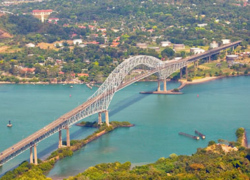
More recently, though, the driving force has been an increasingly potent cocktail of poverty, endemic state weakness, drug trafficking, gang activity, public and private corruption, and organized crime. Central America’s geography all but guarantees a significant amount of drug trafficking – especially for cocaine from the Andean countries passing through the narrow isthmus towards the United States – but there is some evidence that the volume has increased in the past decade. Meanwhile, the three countries remain among the poorest in Latin America. Lack of other opportunities push many young people either into criminal activity or to emigrate. Corruption and state weakness not only make public policy responses more challenging – they have also resulted in governments that are deeply entangled with criminal groups.
US citizens today are clearly unhappy with their government’s anti-drug policies.
Is growing violence in Mexico and elsewhere in Latin America a sign of failures in drug policy? Has the Obama administration made any significant change in anti-drug efforts? What policies should it be pursuing?
Among Latin Americas, there is a growing consensus that the root cause of their violent crime wave is the massive use of narcotics in the US.