













Mexico: How Far Have its Institutions Really Come?
The question remains if Mexico has achieved a degree of institutional development consistent with its participation in those organizations.
This post is also available in: Español
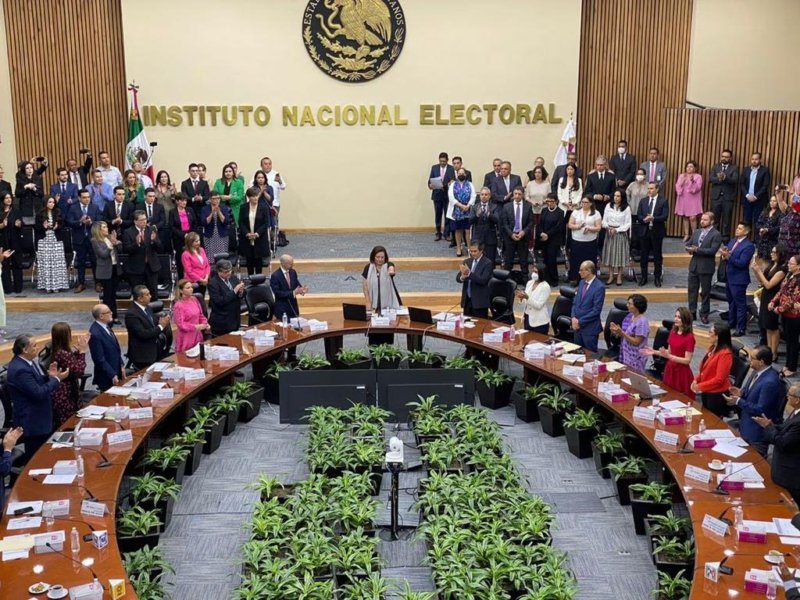 Copyright El Pais: El consejo del INE durante la toma de protesta de Guadalupe Taddei, el 3 de abril en Ciudad de México.
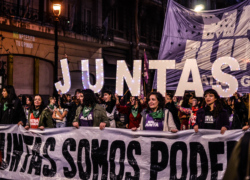
Earlier this year, tens of thousands of Mexicans took to the streets to protest newly enacted legislation gutting the country’s highly-regarded National Electoral Institute (INE) in advance of state elections this year and presidential elections in 2024. In response, the State Department observed: “Today, in Mexico, we see a great debate on electoral reforms on the independence of electoral and judicial institutions that illustrates Mexico’s vibrant democracy.” The facts, however, suggest that unless the Mexican Supreme Court steps in to save the day, Mexico’s democracy may not be so vibrant after all.
The new legislation, known in Mexico as “Plan B” and backed by President López Obrador and his ruling Morena party, came after their “Plan A”—a constitutional amendment targeting INE—narrowly failed to muster the required two-thirds majority in Congress. Passed by a simple majority, Plan B eliminates INE’s professional personnel by over 80 percent, severely limits its ability to monitor elections, and allows the executive branch to interfere with INE’s budget items, structure, internal decisions, as well as the electoral roll. Given INE’s key role in ensuring Mexico’s transition from seven decades of one-party rule to a country with credible elections, these changes strike at the heart of Mexico’s democracy.
On May 8, Mexico’s Supreme Court found unconstitutional one legislative decree of the package (which limited INE’s ability to police political advertising) on the grounds that it violated “legislative procedure, particularly the principle of informed and democratic deliberation.” The president responded by hurling insults at the court and announcing a constitutional reform proposal to have judges elected by popular vote. These attacks on the court follow other attempts to undermine judicial independence, which, together with the president’s constant attacks on political opponents, independent media, and civil society groups, are serious early warnings of democratic decline in the country.
The question remains if Mexico has achieved a degree of institutional development consistent with its participation in those organizations.
Focusing on transnational crime is a top priority of the Obama administration’s policy in Latin America.
Despite reports in recent months that Mexican manufacturing is experiencing a resurgence, Mexico’s industrial sector faces tremendous challenges.