






Colombia-Venezuela Relations: What Are the Prospects?
Colombia and Venezuela have a history of rocky relations characterized by short bursts of improvement and deterioration.
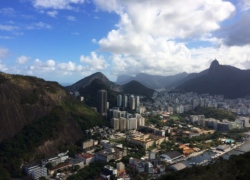
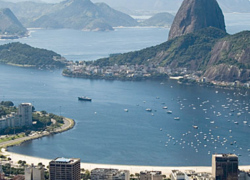
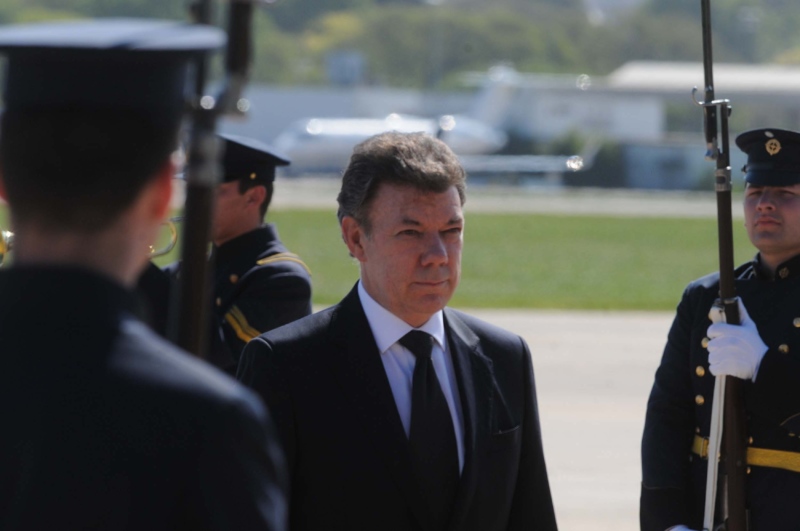 Agencia Brasil / CC BY 3.0 BR
In his address to the nation Sunday night, Colombian President Juan Manuel Santos had a tough task. His aim was to convince increasingly skeptical Colombians that there was “a new light of hope” in his government’s effort to strike a peace agreement with the Revolutionary Armed Forces, or FARC, the country’s main rebel group — an effort that many have come to see as futile.
Just a week ago, at the peace talks in Havana, Santos’s chief negotiator Humberto de la Calle, had made sobering comments in a much-publicized interview, in which he recognized that most Colombians understandably did not believe in a peace process that, as he put it, “was coming to an end, for better or worse.” After all, Santos had said at the outset that the negotiations with the FARC would be a matter of months; they’ve now dragged on for nearly three years. Sporadic violence has raised doubts about whether the FARC negotiators even have control over various columns of the group, scattered about vast territory. A severe setback came in April, when the FARC, having declared an indefinite ceasefire last December, killed 11 soldiers in Cauca, in southern Colombia. Intensified government bombing ensued, followed by relentless FARC attacks on the country’s infrastructure, with significant damage in the poorest regions. For many Colombians, the surge in violence revealed that the process was not serious and that, as in previous peace efforts, the FARC was essentially playing games.
Colombia and Venezuela have a history of rocky relations characterized by short bursts of improvement and deterioration.
On August 7, an important chapter in Colombian-Venezuelan relations that has coincided with the presidencies of Alvaro Uribe and Hugo Chavez will come to an end. These last eight years have been a rollercoaster, with moments of great tension but also occasional pragmatism.
While Santos is familiar with Chávez’s unpredictability and knows as well as anyone where the FARC rebels are and what they are up to, he also knows the economic stakes for Colombia.